
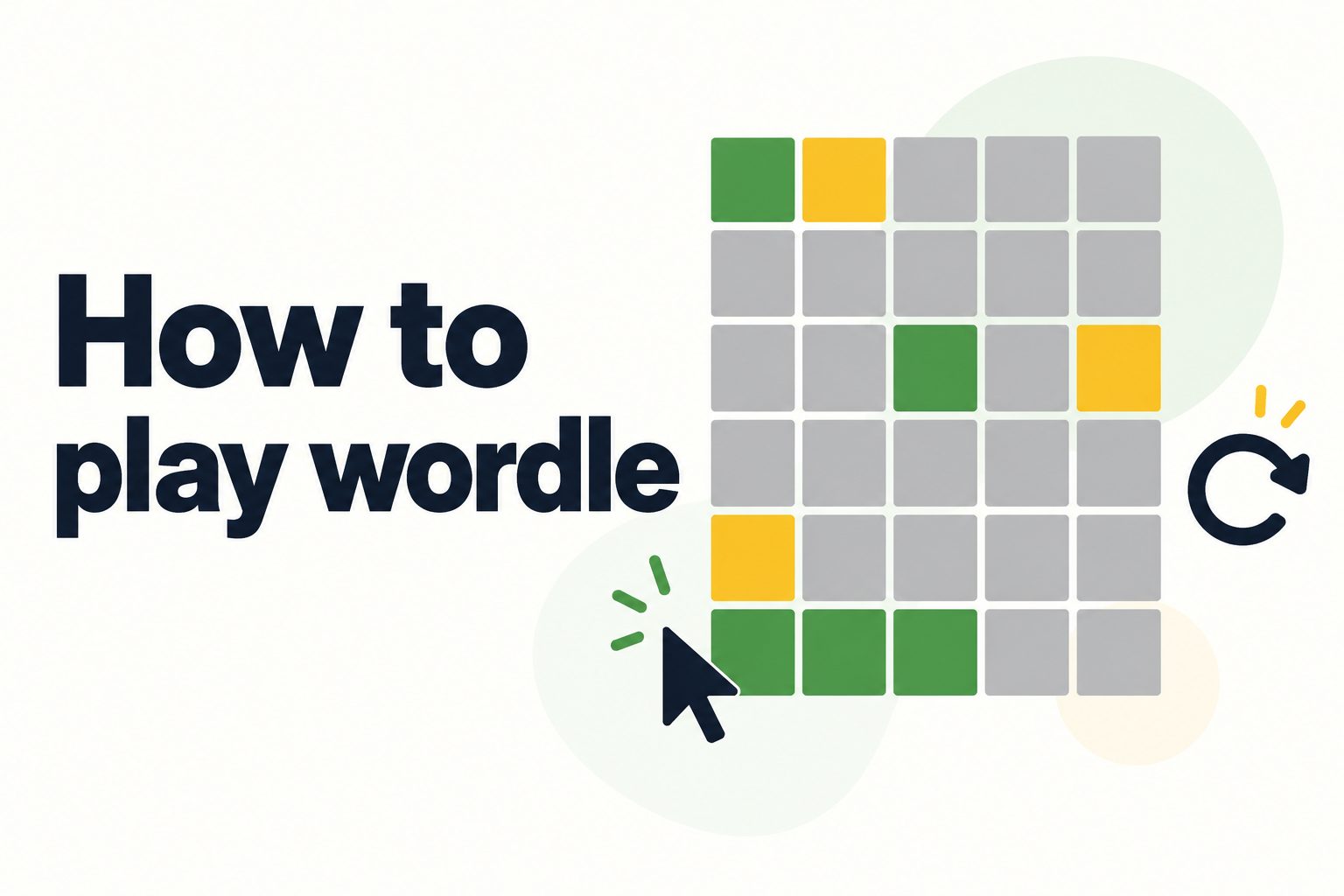
Learning how to play Wordle is simple, but getting better at it takes a little strategy. This daily word game asks you to guess a hidden five-letter word in six attempts. After each guess, colored tiles show which letters are correct, misplaced, or not in the answer at all. The rules are easy enough for beginners, yet each puzzle gives you a satisfying chance to test vocabulary, logic, spelling, and pattern recognition. This guide explains how Wordle works, how to read the clues, how to choose better guesses, and how to avoid common mistakes. You will also find practical tips, examples, and answers to popular questions so you can approach each daily puzzle with more confidence.
What Wordle Is
Wordle is a short daily word puzzle built around deduction. Every player works on the same hidden five-letter word, but the goal is not just to guess randomly. Each attempt gives useful information that should shape your next choice.
You have six chances to identify the answer. A valid guess must usually be a real five-letter word, even if it is not likely to be the final solution.
Its appeal comes from its simple format. A single puzzle can take only a few minutes, but the result often encourages careful thinking and friendly discussion.
Wordle also rewards patience. Even when the first guess reveals very little, you can narrow the possibilities by using the feedback accurately instead of rushing.
The best approach combines a broad opening guess, close attention to tile colors, and a willingness to change direction when the evidence calls for it.
How Wordle Feedback Works
Every guess produces color clues. Reading those clues correctly is the foundation of playing Wordle well.
1. Read Green Tiles Carefully
A green tile means the letter is in the hidden word and already sits in the correct position. Keep that letter in place in later guesses unless you made a typing error. Green tiles are powerful because they reduce both the possible letters and the possible word patterns.
2. Use Yellow Tiles As Placement Clues
A yellow tile means the letter appears in the answer, but it is currently in the wrong position. Move it to a different spot in your next guess. Do not assume it belongs in only one new place; use the rest of the clues to test sensible alternatives.
3. Remove Gray Letters From Your Plan
A gray tile usually means that letter does not appear in the answer. Avoid using it again unless duplicate-letter feedback creates a special situation. Eliminating gray letters prevents wasted guesses and helps you focus on the smaller group of letters that can still form the target word.
4. Watch For Repeated Letters
Repeated letters make Wordle more challenging because a word may contain the same character twice. If one copy receives useful feedback and another does not, examine the exact tile results instead of assuming the letter is completely absent. Position and quantity both matter.
5. Separate Facts From Possibilities
Green and yellow tiles provide facts, while remaining blank positions create possibilities. Keep those categories separate in your mind. For example, knowing that a word contains an A does not prove where the A goes until the available positions and other letters support one placement.
6. Recheck Each Guess Before Submitting
Before you enter a word, compare it with every clue already revealed. Make sure it keeps green letters fixed, moves yellow letters away from rejected spots, and avoids confirmed gray letters. This quick review often prevents a guess that gives little information or breaks an established rule.
How To Play Wordle Step By Step
Use this simple process whenever you open a new puzzle. It keeps each attempt purposeful while leaving room for intuition.
- Start With A Common Word: Choose a five-letter word with several different, frequently used letters.
- Check Every Tile: Note which letters are green, yellow, and gray before thinking about another answer.
- Keep Green Letters Fixed: Preserve confirmed positions in your next guess.
- Move Yellow Letters: Test them in different positions that fit the developing pattern.
- Drop Gray Letters: Do not reuse letters that the puzzle has ruled out.
- Test New Letters: Early guesses should reveal useful vowels and consonants when possible.
- List Likely Patterns: Think about familiar endings, beginnings, and letter combinations.
- Choose The Best Remaining Fit: Submit a word that follows all clues and reduces uncertainty.
Choose A Strong Wordle Opening Word
Your opening word does not need to solve the puzzle immediately. Its main job is to reveal useful information efficiently.
1. Include More Than One Vowel
Vowels appear in many English words, so an opening word that tests two or three different vowels can quickly reveal the structure of the answer. A balanced choice gives you information without relying on unusual spelling patterns that rarely appear in everyday Wordle solutions.
2. Avoid Repeating Letters Early
In the first guess, five different letters usually provide more information than a word with a repeated letter. Testing a wider range of characters helps you identify which letters are present. Save duplicate-letter guesses for later, when the board suggests that repetition may be necessary.
3. Favor Common Consonants
Letters such as R, S, T, L, N, and C often appear in common five-letter words. Pairing a few of them with useful vowels creates a practical opening. The goal is not to find a magic word, but to gather clues that make the next decision easier.
4. Use Familiar Word Shapes
A strong first guess should be an ordinary word with a common spelling pattern. Familiar patterns are easier to build on after the tiles appear. They also help you think of realistic follow-up words instead of getting trapped in obscure vocabulary that is unlikely to be useful.
5. Change Your Starter When Needed
Using one favorite starter is convenient, but changing it occasionally can improve your flexibility. If your usual word repeatedly leaves gaps in your letter coverage, try another word with different vowels and consonants. Variety can sharpen your awareness of how early information changes strategy.
6. Treat The First Guess As Research
Do not judge an opening word only by how many colored tiles it produces. A guess with few matches can still be valuable if it eliminates several common letters. Think of the first attempt as research that gives you a clearer map for the next five guesses.
Wordle Letter Patterns To Know
Pattern recognition turns a collection of tiles into likely words. Common English spelling habits give you useful directions without requiring advanced vocabulary.
1. Notice Common Endings
Many five-letter words share endings such as -ER, -ED, -TY, -LY, -CH, and -SH. When the last letters become clear, consider familiar word families that fit them. This is often faster than trying to think of an entire word from scratch.
2. Test Common Beginnings
Starting combinations such as BR, CL, ST, TR, and PL appear often in English words. If you know the first position or have a useful yellow consonant, test likely beginnings. This helps you create guesses that sound natural and satisfy the evidence on the board.
3. Think About Vowel Placement
Many five-letter words use a vowel near the middle, while others place vowels at the beginning or use two together. If you have discovered one vowel, consider where another might fit. This can prevent you from forcing a word shape that is difficult to pronounce.
4. Look For Common Letter Pairs
Pairs such as TH, CH, SH, CK, NG, and PH frequently occur together. When one letter is confirmed, test whether it forms a familiar pair with another available letter. This approach is especially helpful when several guesses have established only part of the word.
5. Consider Double Letters Late
Double letters are easy to overlook because early guesses often use unique characters. Once the board leaves only a few plausible words, ask whether a repeated vowel or consonant could solve the pattern. Do this when evidence supports it, not as an automatic early assumption.
6. Say The Pattern Quietly To Yourself
Reading an incomplete pattern aloud can trigger useful word ideas. A shape such as _ R A _ E may bring familiar sounds to mind faster than staring at separate tiles. This simple habit uses your natural language knowledge alongside logical elimination.
Common Wordle Mistakes To Avoid
Most lost games come from ignoring information, not from having a limited vocabulary. Avoiding these habits makes your guesses more efficient.
1. Reusing Gray Letters
Using a confirmed gray letter again is one of the easiest ways to waste a turn. Unless duplicate-letter feedback gives a clear reason, treat gray letters as unavailable. Before submitting a guess, scan it for characters that the puzzle has already ruled out.
2. Leaving Yellow Letters In Place
A yellow letter is known to be in the word, but not in the position where you just used it. Leaving it there repeats a failed test. Move the letter to another sensible location and use surrounding letters to determine which placement creates a realistic word.
3. Guessing The First Word You Notice
When a pattern looks close to solved, it is tempting to enter the first possible answer that appears. Pause and compare all available options. A careful guess can distinguish several similar words, while a rushed one may reveal almost nothing and use up a valuable attempt.
4. Ignoring Duplicate-Letter Possibilities
Players sometimes reject a correct answer simply because they have not considered a repeated letter. If a nearly complete pattern seems impossible with unique letters, test the duplicate-letter idea. Pay close attention to how the game handles multiple appearances of the same character.
5. Chasing Rare Words Too Soon
Unusual words can be valid guesses, but they are rarely the best early choice. Start with common letters and familiar patterns before exploring obscure vocabulary. A rare word may feel clever, yet it often tests fewer useful letters than a simple, well-planned alternative.
6. Forgetting The Remaining Guess Count
Your strategy should change when only one or two guesses remain. Early in the game, broad testing is helpful; late in the game, you need a direct answer or a guess that separates the last likely options. Always match your risk level to the turns available.
Best Practices For Playing Wordle
Good Wordle habits help you solve more puzzles while keeping the game enjoyable rather than stressful.
1. Build Each Guess From Evidence
Every new word should respond to what the board already tells you. Keep confirmed letters, relocate misplaced ones, and exclude rejected characters. This evidence-first habit is more reliable than relying on luck and helps you learn why a successful answer was the best fit.
2. Test Several Letters When The Board Is Open
When you have few clues, choose words that test several new letters at once. This creates more information than guessing a word that repeats known characters. Broad testing is especially useful during the first three turns, when the answer pattern is still unclear.
3. Use A Mental Letter List
Keep a quick mental list of confirmed letters, excluded letters, and uncertain positions. You do not need complicated notes, but organizing the clues prevents contradictions. This becomes especially useful when yellow tiles can fit in more than one place or duplicate letters become possible.
4. Balance Logic With Vocabulary
Wordle is not only about knowing many words. Logic narrows the field, while vocabulary supplies candidates that match the pattern. If you feel stuck, return to the clues first. A clear pattern often leads naturally to a familiar word you had not considered.
5. Take A Brief Pause When Stuck
A short break can reset your thinking. Looking away for a moment often makes a missed pattern or letter combination more obvious. This is more productive than repeatedly staring at the same options and forcing guesses that do not follow the available evidence.
6. Review The Answer Afterward
After a puzzle ends, look back at the solution and your choices. Notice whether you missed a common pattern, reused an eliminated letter, or failed to test a useful vowel. Small reviews gradually improve your instincts without turning a casual game into a chore.
Examples Of Smart Wordle Choices
These examples show how a thoughtful player can turn limited feedback into a more useful next move.
1. Testing Vowels After A Quiet Start
Imagine your first guess reveals no useful vowels and eliminates several consonants. Instead of guessing a likely answer immediately, choose a second word that tests untouched vowels along with common consonants. This broadens your information and makes later word patterns much easier to recognize.
2. Moving A Yellow Letter
Suppose an R appears yellow in the second position. Your next guess should place R somewhere else while avoiding gray letters. If a likely pattern supports R at the beginning or near the end, test that structure with fresh letters rather than simply repeating the earlier arrangement.
3. Protecting Confirmed Green Tiles
If the middle letter is green, keep it fixed in every later guess. Build possible words around that position and focus on the empty spaces. Moving a green letter wastes information, whereas preserving it lets each new attempt test only the parts that still need answers.
4. Separating Similar Final Answers
When several words fit the same pattern, choose a guess that tests the letters separating them. For example, if two or three endings remain possible, use a word that includes several competing consonants. This approach can prevent a late-game guessing trap with only one turn left.
5. Recognizing A Double Letter
If a word pattern has nearly formed but no ordinary option fits, consider a repeated character. A double vowel or double consonant can explain why your earlier unique-letter guesses failed. Test this possibility only after checking that all tile feedback allows the required number of that letter.
6. Choosing Information Over Style
A guess does not need to be impressive or unusual to be useful. A plain word that tests two possible consonants and a needed vowel can be far better than a clever-looking choice. In Wordle, practical information creates more wins than dramatic guesses.
Wordle Skills And Benefits
Beyond daily entertainment, Wordle can strengthen several useful thinking habits.
- Vocabulary Practice: Regular puzzles expose you to word shapes, spelling patterns, and less familiar terms.
- Logical Reasoning: Each tile encourages you to eliminate options based on evidence rather than assumptions.
- Pattern Recognition: You become quicker at noticing common endings, letter pairs, and likely word structures.
- Focused Breaks: A short puzzle can provide a calm mental reset during a busy day.
- Patience: The game rewards pausing, reviewing clues, and resisting careless guesses.
- Shared Conversation: Comparing strategies after solving can make a solo puzzle feel social without revealing the answer.
Frequently Asked Questions
1. How Many Guesses Do You Get In Wordle
You get six guesses to find the hidden five-letter word. Each attempt should be used to gather information or test a strong possible answer. Early guesses can explore letters broadly, while later guesses should follow the exact pattern created by your green, yellow, and gray tiles.
2. What Do The Wordle Colors Mean
Green means the letter is correct and in the correct position. Yellow means the letter appears in the answer but belongs somewhere else. Gray means the letter is generally not in the answer. Repeated letters can create more nuanced results, so read each tile in its specific position.
3. Is There A Best First Word For Wordle
There is no single best first word for every puzzle. A useful opening word usually contains different common letters, including one or more vowels. The strongest starter is one that gives you flexible information and helps you make a more intelligent second guess, regardless of immediate color results.
4. Can A Wordle Answer Have Repeated Letters
Yes, a Wordle answer can contain repeated letters. This may include repeated vowels, repeated consonants, or two copies of the same letter in different positions. If a pattern seems difficult to complete, examine whether a duplicate letter would fit the clues better than an all-unique-letter answer.
5. Should You Use Unusual Words In Wordle
Unusual words can sometimes be valid and helpful, but they are not usually the best starting point. Common words with frequent letters tend to provide clearer information. Save less familiar vocabulary for situations where it precisely matches the clues or efficiently tests the remaining possibilities.
6. How Can I Improve At Wordle Quickly
Improve by treating every tile as evidence. Use varied letters early, preserve green positions, move yellow letters, and avoid gray letters. Learn common five-letter patterns and review puzzles after you finish them. Consistent, thoughtful play usually improves results more than memorizing a list of starter words.
Conclusion
Knowing how to play Wordle starts with the basic color clues, but steady success comes from using those clues with purpose. Choose broad opening guesses, keep confirmed letters in place, test new possibilities carefully, and pay attention to common English word patterns.
Wordle is most enjoyable when you balance strategy with curiosity. Take your time, learn from each attempt, and let the puzzle narrow the answer for you. With a few reliable habits, every daily game becomes easier to approach and more satisfying to solve.